
He Learned to Be His Own Best Friend
January 3, 2026
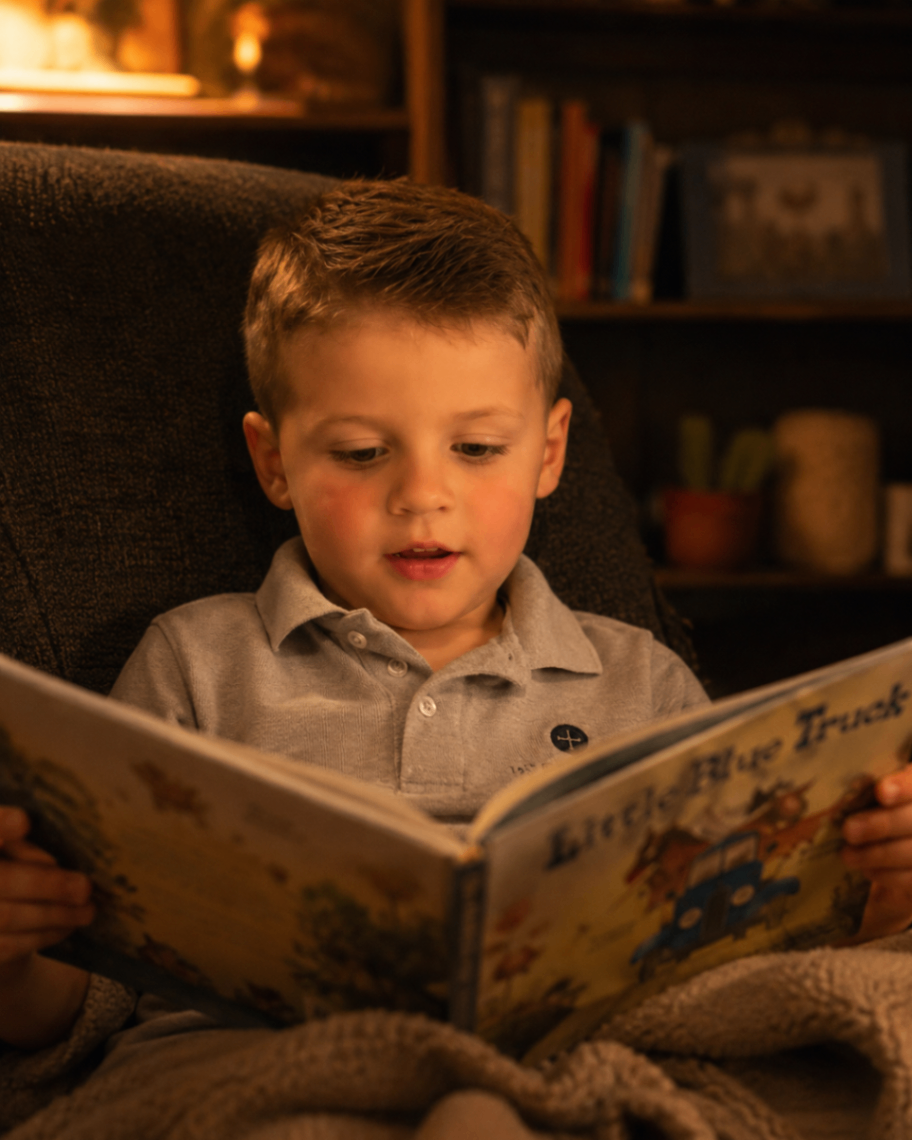
I noticed it first when he was three. He had been playing alone in his room for nearly an hour, building something with blocks and narrating quietly to himself, and when I peeked in, he looked up at me with the expression of someone who had been somewhere good and was not quite ready to leave.
He was content. Genuinely, deeply content. In his own company.
The Gift of Solitude
We live in a culture that pathologizes aloneness. A child playing by himself is a child who needs more playdates, more socialization, more stimulation. We rush to fill the quiet. We worry about the stillness.
But solitude, chosen and comfortable solitude, is one of the most valuable capacities a person can have. It is the ability to be with yourself without distress. To find your own company sufficient. Many adults never develop it. My son has it at five, and I think it will carry him his whole life.
Research backs this up. Studies on only children consistently find that they score higher on measures of self-reliance and internal motivation than children with siblings. Without a built-in playmate, only children learn early to generate their own entertainment, regulate their own emotions, and sit comfortably inside their own minds. That is not a deficit. That is a skill.
In her book One and Only: The Freedom of Having an Only Child, and the Joy of Being One, journalist and researcher Lauren Sandler writes that only children tend to develop a particularly strong sense of self precisely because they spend so much time alone with their own thoughts. She notes that the stereotype of the lonely, maladjusted only child is not supported by the data. What the research actually shows is that only children are, on average, more confident, more creative, and more comfortable with independence than their peers from larger families.
What He Does in the Quiet
He builds. He imagines. He draws elaborate maps of places that do not exist. He tells stories to his stuffed animals with the seriousness of a novelist working out a plot. He sits at the window and watches things, birds, clouds, the neighbor's cat, with a quality of attention that I find quietly astonishing.
He is developing an inner life. A rich, textured, private inner life. And I believe that inner life, that capacity to be alone with his own thoughts and find them interesting, is one of the most important things he will ever have.
Psychologist Ester Buchholz, who spent decades studying the role of solitude in child development, argued that alonetime is not the opposite of connection. It is the foundation of it. Children who learn to be alone well, she found, are actually better at relationships because they are not dependent on others to manage their inner world. They bring a whole self to their friendships rather than looking for someone else to complete them.
Our Job in the Quiet
Our job is not to fill the quiet. Our job is to protect it. To resist the urge to schedule every hour, to provide constant entertainment, to make sure he is never bored. Boredom is where imagination lives. Stillness is where the inner life grows.
Sandler also points out that only children benefit enormously from parents who resist the temptation to over-involve themselves in their child's solitary play. When we hover, we interrupt the very process that builds independence. When we trust the quiet, we give our children permission to trust themselves.
Let him be alone sometimes. Let him be bored. Let him find his own company sufficient. You are not neglecting him. You are giving him one of the rarest gifts in modern childhood.
"But godliness with contentment is great gain."
— 1 Timothy 6:6
Serenity in Our One
A blog about raising one child with faith, intention, and a whole lot of grace. Five years in, still learning every day.

Enjoyed this post?
Join the journey — new posts delivered gently to your inbox.