
Teaching Gratitude to a Child Who Has Everything
January 30, 2026
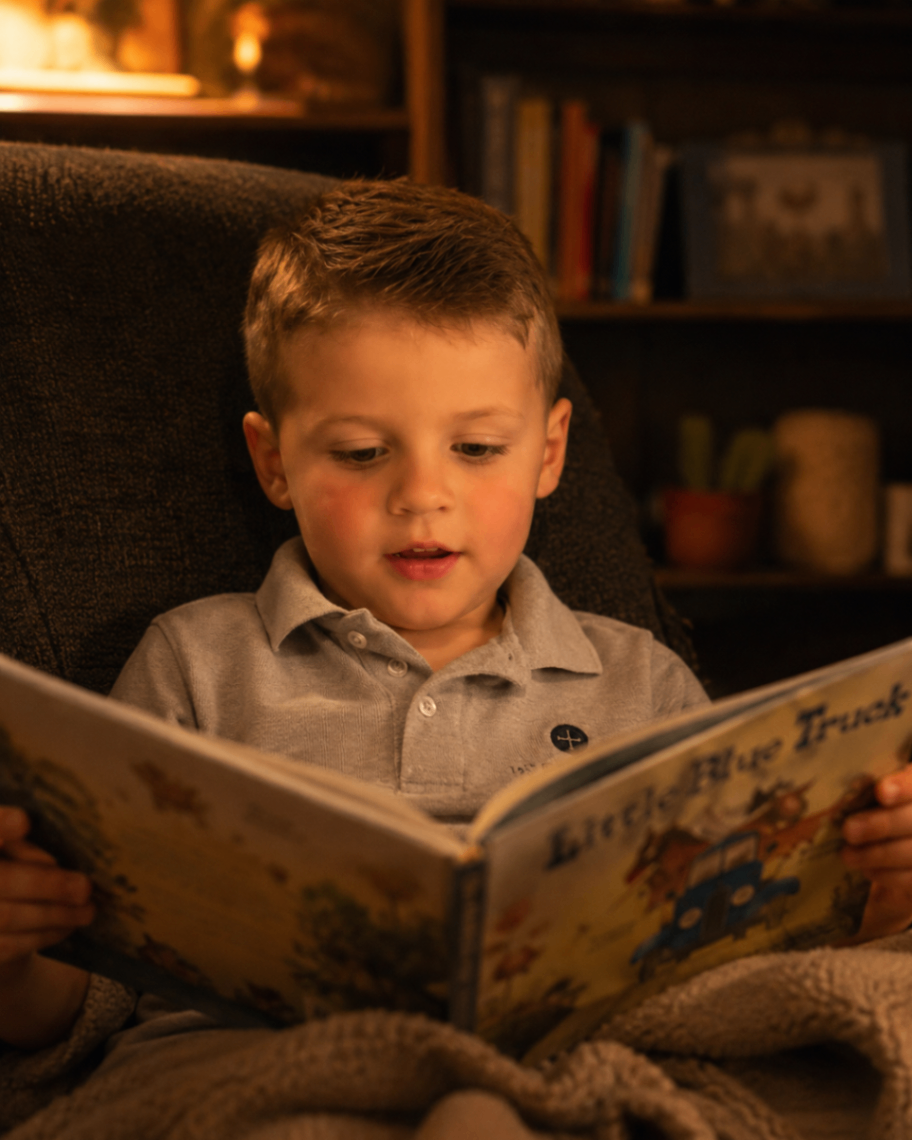
I think a lot about how to raise a grateful child in a home where, if I am honest, he has more than enough. Greyson has toys, books, snacks he likes, clothes that fit, a safe bed, vacations, grandparents who adore him, and two parents who pay very close attention to his life. He is our only child, which means there is no sibling sharing the attention, the resources, the conversations, or the space.
That is a gift. It is also something I feel responsible to steward well. Because when you are raising an only child, it can be easy for the whole house to quietly orbit around one little person. His preferences can become the loudest. His feelings can set the tone. His wants can start to feel urgent simply because there is not another child's need competing for the room. And if I am not careful, love can slide into over-accommodation.
What Gratitude Is Not
I do not want Greyson to feel guilty for what he has. That is not gratitude. I do not think we teach children thankfulness by making them feel bad for being blessed. But I also do not want him to grow up assuming that blessing is normal, comfort is owed, or every desire needs to be met with yes.
James 1:17 says, "Every good and perfect gift is from above." That is where gratitude begins for us. Not shame, but recognition. This came from God. This is not guaranteed. This is meant to be received with thanks. And this is meant to make us generous.
What Gratitude Looks Like at Five
At four or five years old, gratitude is still forming. A child can say "thank you" and still melt down five minutes later because the blue cup is unavailable. He can thank God for dinner and then refuse to eat it. He can be genuinely thankful for a toy and still ask for another one the next day. That does not mean gratitude is not working. It means he is little.
Research on young children and gratitude suggests that gratitude grows when children begin to notice not only the gift, but the giver. It is not just, "Say thank you." It is helping them understand, "Someone thought of you. Someone helped you. Someone gave their time, effort, or kindness." So I am trying to ask better questions: "Wasn't that kind of Daddy to help you?" "Did you notice your teacher made that for you?" "How did it feel when your friend shared?" "What can we do to show we are thankful?" Those questions move gratitude from manners to awareness.
The Rhythms That Form It
Justin Whitmel Earley's Habits of the Household reminds me that the ordinary rhythms of home are quietly forming our children. Gratitude is not built only in big holiday moments. It is built at the dinner table, in bedtime prayers, in thank-you notes, in how we talk about what we have, and in how we respond when we do not get what we want. And that part is convicting. I cannot demand gratitude from Greyson while living entitled myself. If I complain constantly about what is inconvenient, what someone else has, or what did not go my way, I should not be surprised when he absorbs that posture. Children are always listening.
Philippians 4 reminds us that contentment is learned. That encourages me because contentment does not come naturally to most adults, so I probably should not expect it to come naturally to a preschooler surrounded by snacks, toys, Amazon boxes, birthday parties, and constant options. In our home, teaching gratitude sounds simple and repetitive: "You can be disappointed and still be thankful." "We are not buying something every time we go into a store." "You already have enough." "It is okay to want something. It is also okay not to get it." "Let's thank God for what we do have." Sometimes those words are received sweetly. Other times, it feels like teaching gratitude to a tiny lawyer who is deeply offended by the injustice of not getting another treat.
The Heart Behind the Habit
Paul David Tripp's Parenting reminds me that the goal is not simply behavior modification, but heart transformation. I do not just want Greyson to say polite words. I want him to become the kind of person who notices goodness, receives it humbly, and responds with love. One of the best ways we practice that is generosity: choosing toys to donate, making a card for someone who is sick, helping pick food for a food drive, thanking a teacher with a drawing, praying for a friend who is sad, and learning that what we have is not only for us.
1 Timothy 6 reminds those who have plenty not to put their hope in riches, but in God, who richly provides everything for our enjoyment, and then calls us to be generous and rich in good deeds. I love that balance. God gives good gifts. We are allowed to enjoy them. But blessing should not make our hands tighter. It should make them more open.
I do not want to raise a child who feels guilty for being blessed. I want to raise a child who understands that everything we have is grace. Guilt says, "You should feel bad for having this." Gratitude says, "This is a gift. Receive it with humility. Enjoy it with thankfulness. Share it with joy."
That is the heart I want to cultivate in our home. Greyson has more than enough. So do I. And maybe the work of gratitude is learning to see that clearly, say it honestly, and let it change the way we live.
"Every good gift and every perfect gift is from above, coming down from the Father of lights."
— James 1:17
Serenity in Our One
A blog about raising one child with faith, intention, and a whole lot of grace. Five years in, still learning every day.


Enjoyed this post?
Join the journey — new posts delivered gently to your inbox.